
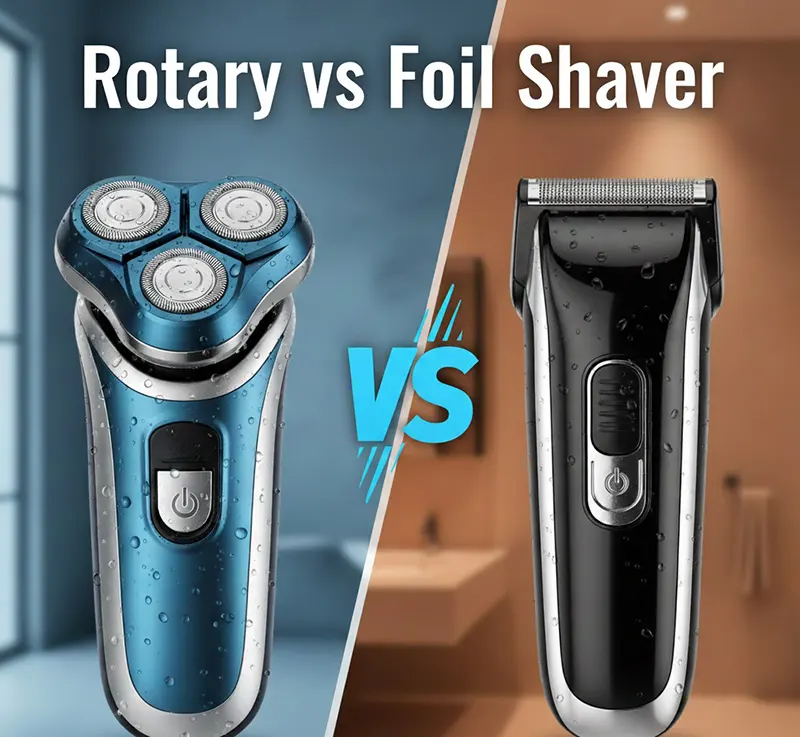
Choosing between a rotary and foil shaver can feel overwhelming when you’re shopping for an electric razor. Both technologies have been refined over decades, yet they work in fundamentally different ways. This comprehensive guide will help you understand the key differences between rotary vs foil shavers, so you can make an informed decision based on your specific needs.
What is a Foil Shaver?
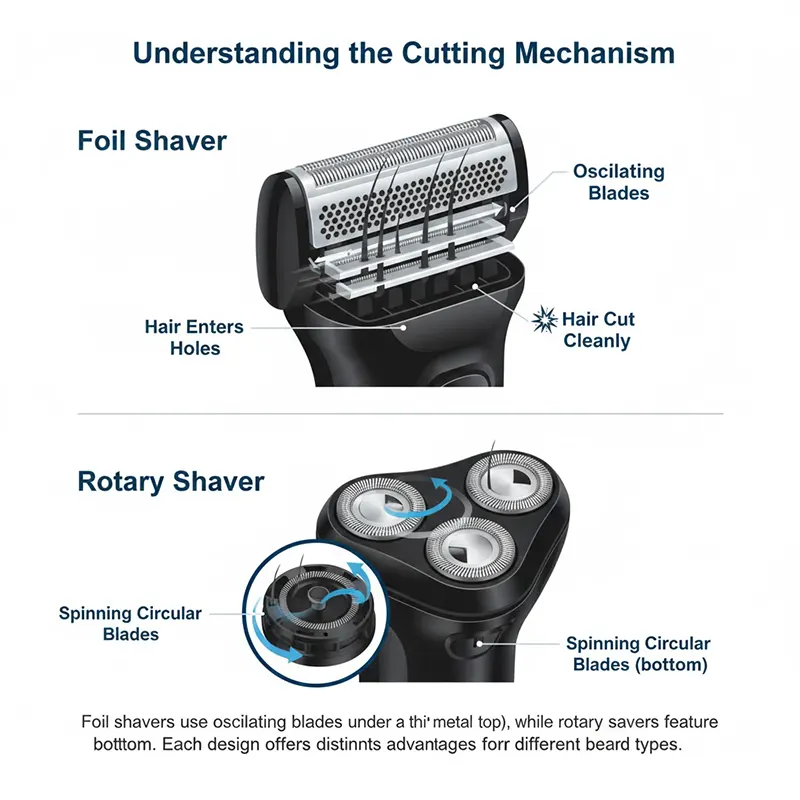
A foil shaver uses oscillating blades beneath a thin, perforated metal foil. The foil has tiny holes that capture hairs, which are then cut by the rapidly moving blades underneath. The blades move back and forth at incredibly high speeds, typically around 10,000 to 14,000 cycles per minute.
How Foil Shavers Work
The cutting mechanism of a foil shaver is straightforward. As you glide the shaver across your skin, facial hair pokes through the foil’s perforations. The oscillating blades then slice the hair close to the skin’s surface. Most foil shavers feature multiple foils arranged in a linear pattern, allowing for efficient coverage with vertical strokes.
Popular Foil Shaver Brands
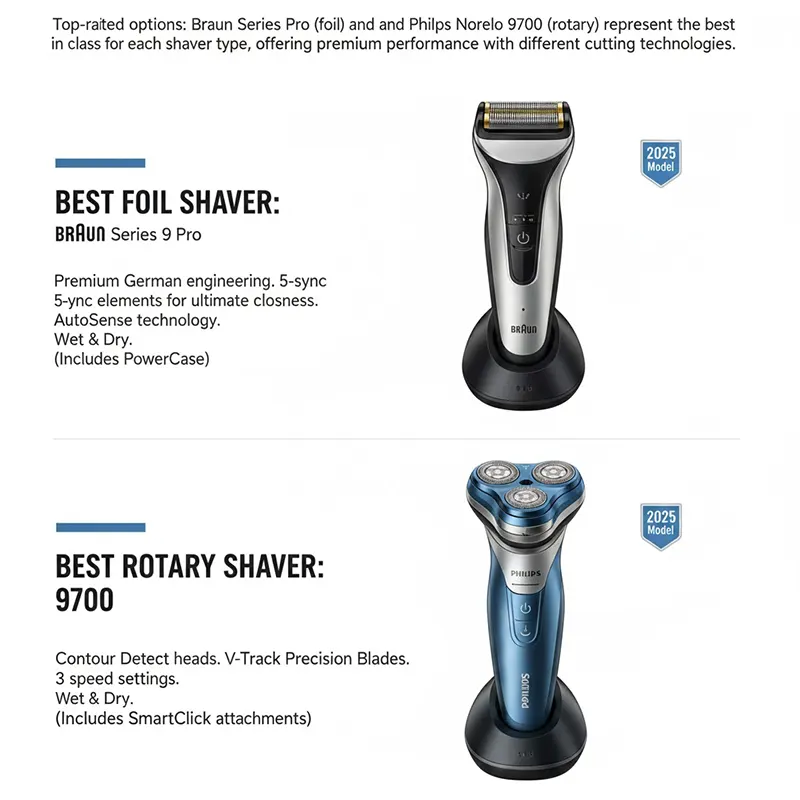
Leading manufacturers of foil shavers include Braun, Panasonic, and Wahl. Braun’s Series 9 and Panasonic’s Arc5 are consistently ranked among the best foil shavers on the market.
What is a Rotary Shaver?
A rotary shaver features circular cutting heads that rotate to catch and cut hair. Typically, these shavers have three circular heads arranged in a triangular formation, though some models feature two or four heads. Each head contains spinning blades beneath a circular guard.
How Rotary Shavers Work
Rotary shavers use a different cutting action compared to foil models. The circular heads contain blades that spin continuously, capturing hairs through the guards’ slots and cutting them with a circular motion. This design allows the heads to pivot and flex, conforming to facial contours like the jawline and neck.
Popular Rotary Shaver Brands
Philips Norelco dominates the rotary shaver market, with their Series 9000 and Shaver 9700 being top-tier options. Remington also produces quality rotary shavers at more affordable price points.
Rotary vs Foil Shaver: Key Differences
Shaving Motion and Technique
Foil Shavers: Require straight, linear strokes in an up-and-down or side-to-side motion. You’ll achieve best results by shaving against the direction of hair growth with steady, vertical movements.
Rotary Shavers: Work best with circular motions. The rotating heads are designed to follow the natural contours of your face as you move the shaver in small, circular patterns.
Closeness of Shave
Foil Shavers: Generally provide a closer shave due to the thin foil sitting closer to the skin. The high-speed oscillating action cuts hair very close to the surface, making foil shavers ideal if you want that “just shaved with a blade” smoothness.
Rotary Shavers: Offer a close shave but typically not quite as close as foil shavers. However, modern premium rotary models have significantly narrowed this gap.
Speed and Efficiency
Foil Shavers: Tend to be faster for daily maintenance shaving, especially on shorter stubble. The linear design covers more surface area quickly when used correctly.
Rotary Shavers: May require slightly more time but excel at capturing longer hairs. They’re often more efficient when dealing with several days’ worth of growth.
Comfort and Skin Irritation
Foil Shavers: Can be more aggressive on sensitive skin due to the closer cutting action. However, they’re excellent for users who don’t experience irritation and want maximum smoothness.
Rotary Shavers: Generally gentler on sensitive skin. The design keeps the blades at a slightly greater distance from the skin, reducing the risk of razor burn and irritation.
Noise Level
Foil Shavers: Typically produce more noise due to the high-frequency oscillating motor. Premium models have improved significantly, but they’re generally louder than rotary shavers.
Rotary Shavers: Operate more quietly thanks to the smooth rotational movement. If you shave early in the morning and don’t want to wake others, a rotary shaver might be preferable.
Maintenance and Cleaning
Foil Shavers: Usually easier to clean manually. The foil lifts off easily, allowing you to brush away hair clippings. Many models now include automatic cleaning stations.
Rotary Shavers: Require more thorough cleaning due to the circular head design. Hair can accumulate in the rotating chambers, though modern models often feature easy-open heads and cleaning stations.
Rotary vs Foil Shaver: Pros and Cons
Foil Shaver Advantages
- Closer shave overall
- Faster for daily grooming
- Better for straight, fine hair
- Excellent for detail work and edges
- Ideal for sensitive areas like upper lip
Foil Shaver Disadvantages
- Can cause more irritation on sensitive skin
- Requires specific shaving motion
- Generally louder operation
- Foil replacements can be expensive
- Less effective on longer growth
Rotary Shaver Advantages
- Better for facial contours
- Gentler on sensitive skin
- Handles longer hair more effectively
- Quieter operation
- Good for thick, coarse hair
- More versatile shaving motion
Rotary Shaver Disadvantages
- Slightly less close shave
- Takes longer to master technique
- Cleaning can be more complex
- Not ideal for precise edging
- May miss fine hairs
Which Shaver Type is Best for Your Beard Type?
Fine or Thin Hair
Foil shavers work exceptionally well for fine hair. The oscillating blades easily capture and cut thin hairs, providing a smooth finish quickly.
Thick or Coarse Hair
Rotary shavers generally perform better with thick, coarse beards. The circular cutting action and stronger motors handle dense hair more effectively without pulling.
Curly Hair
If you have curly facial hair or are prone to ingrown hairs, rotary shavers are usually the better choice. They’re less likely to cause irritation and pull on curved hair follicles.
Straight Hair
Foil shavers excel with straight hair growth patterns, cutting efficiently as you shave in straight lines against the grain.
Best Rotary vs Foil Shaver for Skin Type
Sensitive Skin
Recommendation: Rotary shaver. The gentler cutting action and greater distance from the skin reduce irritation, razor burn, and redness. Look for models with hypoallergenic blades and multiple comfort settings.
Normal Skin
Recommendation: Either works well. Choose based on your beard type and personal preference. You have the flexibility to prioritize closeness (foil) or comfort (rotary).
Oily or Acne-Prone Skin
Recommendation: Foil shaver. The cleaner, closer cut reduces the likelihood of ingrown hairs. Ensure you clean the shaver thoroughly after each use to prevent bacteria buildup.
Price Comparison: Rotary vs Foil Shavers
Both shaver types are available across all price ranges:
Budget Range ($30-$75): Entry-level options from both categories provide decent performance. Rotary shavers at this price point often offer better value.
Mid-Range ($75-$200): This is where both technologies shine. You’ll find excellent performers from Braun, Panasonic, and Philips Norelco.
Premium Range ($200-$400+): High-end models feature advanced technologies like AI sensors, automatic cleaning stations, and premium materials. Both rotary and foil shavers in this category deliver exceptional results.
Maintenance and Replacement Costs
Foil Shaver Maintenance
Foil and cutter replacements are recommended every 12-18 months, costing between $30-$70 depending on the model. Premium models may cost more but typically last longer.
Rotary Shaver Maintenance
Rotary heads should be replaced approximately every 12 months, with replacement sets costing $40-$80. The rotating mechanism may require occasional lubrication.
Top Recommendations
Best Foil Shavers
- Braun Series 9 Pro – Premium option with exceptional closeness. Check Price On Amazon
- Panasonic Arc5 – Excellent performance at mid-premium price. Check Price On Amazon
- Braun Series 7 – Best mid-range foil shaver. Check Price On Amazon
- Panasonic Arc3 – Top budget-friendly choice. Check Price On Amazon
Best Rotary Shavers
- Philips Norelco 9700 – Premium rotary with smart sensors. Check Price On Amazon
- Philips Norelco 7500 – Great mid-range option. Check Price On Amazon
- Philips Norelco 5500 – Excellent value shaver. Check Price On Amazon
- Remington XR1400 – Best budget rotary. Check Price On Amazon
Making Your Final Decision
When choosing between rotary vs foil shavers, consider these deciding factors:
Choose a Foil Shaver if:
- You want the closest possible shave
- You have fine or straight facial hair
- You shave daily with shorter stubble
- You don’t have particularly sensitive skin
- You prefer a quick, efficient shaving routine
Choose a Rotary Shaver if:
- You have sensitive skin prone to irritation
- Your beard is thick and coarse
- You have pronounced facial contours
- You let your beard grow for several days between shaves
- You prefer quieter operation
- You’re still learning electric shaving technique
Frequently Asked Questions
Can you get as close a shave with a rotary as a foil?
Modern premium rotary shavers come very close to foil shavers in terms of closeness, but foil shavers still have a slight edge for most users.
Which lasts longer, rotary or foil shavers?
With proper maintenance, both types last 5-7 years on average. The motors are equally durable, though replacement parts differ in cost and availability.
Can I use shaving cream with both types?
Many modern shavers from both categories support wet shaving with gel or foam. Check your specific model’s wet/dry capability.
Is switching between types difficult?
There’s typically a 2-3 week adjustment period when switching shaver types as your skin and technique adapt to the new cutting method.
Do rotary shavers work on head shaving?
Yes, rotary shavers are often preferred for head shaving due to their ability to conform to the scalp’s curves.
Conclusion
The rotary vs foil shaver debate doesn’t have a universal winner. Your ideal choice depends on your individual beard characteristics, skin sensitivity, and shaving preferences. Foil shavers deliver unmatched closeness and speed for daily grooming, while rotary shavers offer superior comfort and versatility for various hair types and facial contours.
Consider your beard type, skin sensitivity, and budget when making your decision. Both technologies have evolved significantly, and quality models from either category will serve you well for years. If possible, try both types to see which feels more natural and delivers results you’re happy with.
Ready to make your purchase? Check out our detailed individual reviews of the top-rated shavers mentioned in this guide to find the perfect match for your grooming routine.